🌟 Introduction
🥦 What Are Broccoli Microgreens?
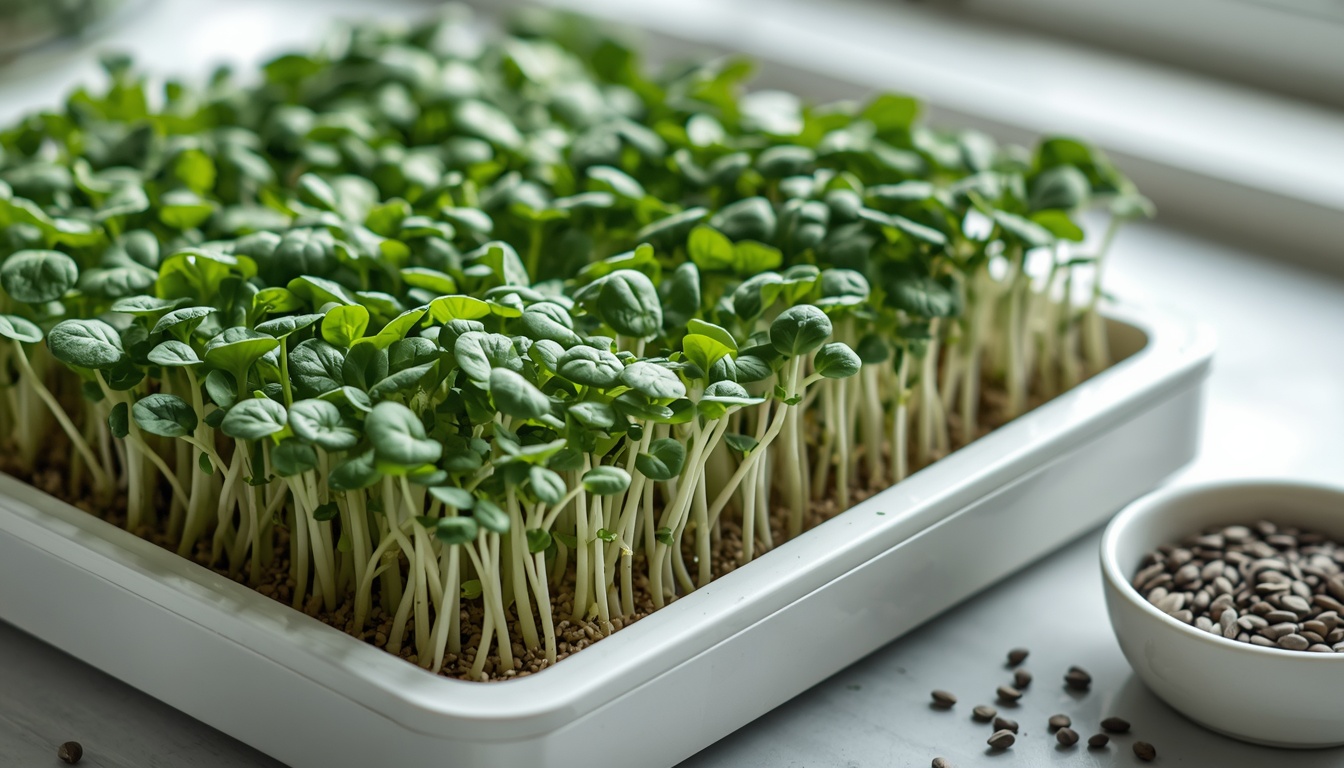
Broccoli microgreens are young broccoli plants harvested shortly after the seedling stage, usually when the first leaves have developed.
They come from the same plant family as mature broccoli but are harvested much earlier.
You can grow them using:
- Microgreen trays
- Cocopeat
- Soil-based growing media
- Hemp or other growing mats
- Hydroponic or soilless systems
They generally require little space and have a short growing cycle, making them particularly suitable for home growers and indoor gardening.
🌱 Broccoli Sprouts vs Broccoli Microgreens
These terms are sometimes used interchangeably, but they are not exactly the same.
Broccoli sprouts are usually harvested much earlier, with the seedling primarily consisting of a developing root and stem.
Broccoli microgreens are allowed to grow longer and develop their first leaves. They are normally grown in a growing medium and harvested above the medium.
Both can contain glucoraphanin and contribute to sulforaphane formation, but their nutritional composition can vary depending on variety and growing conditions.
Interestingly, a human study found that fresh broccoli microgreens were a significant source of sulforaphane-related metabolites, although much more research is needed to understand their long-term health effects.
🧪 Why Are Broccoli Microgreens Famous for Sulforaphane?
If you’ve searched for broccoli microgreens benefits, you’ve probably come across the word sulforaphane.
So what is it?
Sulforaphane is a naturally occurring compound belonging to a group called isothiocyanates. Broccoli plants contain a precursor called glucoraphanin.
When the plant tissue is cut or crushed, an enzyme called myrosinase can help convert glucoraphanin into sulforaphane.
In simple terms:
Glucoraphanin + Myrosinase → Sulforaphane
This is one reason broccoli and broccoli sprouts have received so much attention in nutrition research.
However, it is important not to treat sulforaphane as a miracle cure. Research is promising, but studies on human health outcomes are still developing.
💚 Health Benefits of Broccoli Microgreens
Broccoli microgreens provide a combination of vitamins, minerals, plant compounds and antioxidants. Their exact nutritional content can vary according to seed variety, growing conditions, light, age and harvesting stage.
Here are some of the potential benefits worth knowing.
1. 🛡️ Rich in Protective Plant Compounds
Broccoli microgreens contain glucosinolates, including glucoraphanin, which can contribute to sulforaphane formation.
These compounds are being studied for their antioxidant, anti-inflammatory and other biological activities.
2. 🧪 A Natural Source of Sulforaphane Precursors
One of the biggest reasons people choose broccoli microgreens for health is their glucoraphanin content.
Research involving fresh broccoli microgreens found that a single serving provided glucoraphanin and resulted in detectable sulforaphane-related metabolites in participants.
That makes broccoli microgreens particularly interesting for people looking to include more cruciferous plant foods in their diet.
3. 🌿 Provides Antioxidant Compounds
Broccoli microgreens contain various bioactive compounds that contribute to antioxidant activity.
Antioxidants help protect cells from oxidative stress, although eating one particular food should not be viewed as a replacement for an overall balanced diet.
4. ❤️ Supports a Healthy Diet
Adding microgreens to meals can make it easier to eat a greater variety of plant foods.
Broccoli microgreens can be added to:
- Salads
- Sandwiches
- Wraps
- Dal
- Soups
- Eggs
- Poha
- Upma
- Smoothies
- Rice bowls
Their fresh flavour also makes simple meals more interesting.
5. 🥗 Low-Calorie Way to Add More Greens
Like many leafy greens, broccoli microgreens can add freshness and volume to meals without contributing a large amount of calories.
They can therefore fit comfortably into a balanced diet focused on vegetables and other nutrient-rich foods.
6. 🌱 Fresh and Easy to Grow at Home
One of the biggest practical advantages isn’t nutritional at all.
You can grow broccoli microgreens at home in a small tray and harvest them within a relatively short period.
That means you can enjoy freshly harvested greens without needing a garden or large balcony.
🧬 Broccoli Microgreens Nutrition
The exact nutrition of broccoli microgreens varies with growing conditions, seed genetics, harvest age and production method.
They can provide a range of:
- Vitamin C
- Vitamin K
- Carotenoids
- Folate
- Minerals
- Glucosinolates
- Phenolic compounds
- Other antioxidant compounds
Rather than thinking of broccoli microgreens as a replacement for vegetables, consider them a nutrient-rich addition to a varied diet.
Research on microgreens continues to show that growing conditions can influence their nutritional composition, so there isn’t one fixed nutrition profile for every tray.
🥦 Broccoli Microgreens vs Mature Broccoli
Which one is better?
The answer isn’t quite that simple.
| Feature | Broccoli Microgreens | Mature Broccoli |
|---|---|---|
| Harvest stage | Young plant | Mature vegetable |
| Growing time | Short | Much longer |
| Space required | Very little | More space |
| Flavour | Fresh, mild and slightly peppery | Stronger broccoli flavour |
| Texture | Tender | Firmer |
| Glucosinolates | Can be significant | Present |
| Fibre | Lower overall amount per serving | Higher |
| Growing at home | Very easy | Requires considerably more space |
Instead of choosing one over the other, you can enjoy both broccoli and broccoli microgreens as part of a varied diet.
🌱 How to Grow Broccoli Microgreens at Home
One reason broccoli microgreens are popular with beginners is that they are relatively simple to grow.
🧰 What You Need
- Broccoli microgreen seeds
- Growing tray
- Cocopeat or suitable growing medium
- Clean water
- Spray bottle
- Small fan, if ventilation is poor
- Natural or artificial light
You don’t need an expensive setup to get started.
Step 1: 🌾 Prepare Your Growing Tray
Fill your tray with around 2–3 cm of a clean, moist growing medium.
Cocopeat is a convenient option for beginners because it is lightweight and retains moisture well.
Make sure the medium is moist but not soaking wet.
Step 2: 🌱 Spread the Seeds
Spread broccoli seeds evenly across the surface.
You want good coverage without creating an extremely thick layer.
Overcrowding can reduce airflow and increase the chance of mould.
Step 3: 💧 Moisten the Seeds
Mist the seeds gently using clean water.
Avoid flooding the tray because excessive moisture can create problems with fungal growth.
Step 4: 🌑 Use a Blackout Period
Cover the tray and keep it in a warm, dark location while the seeds germinate.
Check the tray regularly.
Once the seedlings have established themselves and are ready for light, uncover the tray.
Step 5: ☀️ Provide Good Light
Move your broccoli microgreens to a bright location.
You can use:
Natural light:
A bright area near a window can work well.
Artificial light:
A suitable LED grow light can provide more consistent conditions, especially if your home doesn’t receive enough sunlight.
Good lighting helps produce strong stems and healthy green leaves.
Step 6: 💦 Water Carefully
Once the seedlings are established, bottom watering can be useful.
Add water to the bottom tray and allow the growing medium to absorb it.
This reduces disturbance to the delicate stems and can help keep the foliage drier.
Avoid keeping the growing medium constantly saturated.
Step 7: 🌬️ Give Them Good Airflow
Good ventilation is particularly important when growing microgreens in India’s warm or humid conditions.
A small fan on a gentle setting can improve air movement.
You don’t want strong wind blowing directly onto the plants.
Good airflow helps reduce excess humidity and can lower the risk of mould.
Step 8: ✂️ Harvest Your Broccoli Microgreens
Broccoli microgreens are generally ready when the seedlings have developed their first leaves and look healthy and vibrant.
Depending on your setup and growing conditions, harvesting may take roughly 7–14 days.
Cut them just above the growing medium using clean scissors.
🦠 How to Prevent Mould on Broccoli Microgreens
Mould is one of the biggest concerns for beginners.
Fortunately, prevention is easier than trying to rescue a badly affected tray.
Follow these simple practices:
✅ Don’t oversoak the growing medium
✅ Don’t overcrowd your seeds
✅ Provide good ventilation
✅ Use clean trays
✅ Use clean water
✅ Avoid constantly wet foliage
✅ Give the plants enough light
✅ Clean equipment between batches
⚠️ What if you see actual mould?
If you see obvious fuzzy mould spreading across the growing medium or plants, don’t simply wash it off and assume the microgreens are safe.
It’s better to discard a badly contaminated batch and clean the tray thoroughly before starting again.
🍽️ How to Eat Broccoli Microgreens
You don’t need complicated recipes.
Try adding fresh broccoli microgreens to:
🥗 Salads
Add a small handful for extra freshness and texture.
🥪 Sandwiches
Use them instead of ordinary lettuce or alongside it.
🌯 Wraps
Add them to paneer, chicken or vegetable wraps.
🍳 Eggs
Sprinkle them over scrambled eggs or an omelette after cooking.
🍛 Indian Meals
Use them as a fresh topping for dal, khichdi, poha or upma.
🥤 Smoothies
A small amount can be blended with fruits and other greens.
🍲 Soups
Add them towards the end rather than cooking them for a long time.
🔥 Does Cooking Destroy Sulforaphane?
This is where things get interesting.
The formation of sulforaphane depends on the interaction between glucoraphanin and myrosinase. Both sulforaphane and plant myrosinase can be affected by heat, meaning processing and cooking conditions can influence how much sulforaphane is ultimately formed.
If you’re specifically interested in preserving the potential sulforaphane-forming activity of broccoli microgreens, eating them fresh and raw is one simple option.
However, raw isn’t automatically better for everyone. Food safety, freshness and personal tolerance should always come first.
❓ Frequently Asked Questions
Are broccoli microgreens healthier than broccoli?
They are different rather than simply “better”. Broccoli microgreens can provide concentrated amounts of certain plant compounds, while mature broccoli provides more bulk and dietary fibre. Both can be part of a healthy diet.
Are broccoli microgreens high in sulforaphane?
Broccoli microgreens contain glucoraphanin and can be a source of sulforaphane-related metabolites. A human study found that fresh broccoli microgreens provided a significant source of sulforaphane.
How long do broccoli microgreens take to grow?
Many home growers can harvest broccoli microgreens in approximately 7–14 days, depending on temperature, light, seed quality and growing conditions.
Can I grow broccoli microgreens without soil?
Yes. Broccoli microgreens can be grown using soilless media such as cocopeat and suitable growing mats.
Can I grow broccoli microgreens indoors?
Absolutely. They are particularly suitable for indoor growing because they require very little space and have a short growth cycle.
Can you eat broccoli microgreens every day?
They can be included as part of a varied diet if you tolerate them well. However, there is no need to consume large amounts simply because they are nutrient-rich.
⚠️ Important: Don’t Believe Every Sulforaphane Claim
You may see websites claiming that broccoli microgreens can cure cancer, reverse diabetes, detox your body or prevent every major disease.
Be careful with such claims.
Sulforaphane has been extensively researched and shows interesting biological effects, but promising laboratory and early clinical findings do not mean broccoli microgreens are a treatment or cure for disease. Reviews of the evidence also point out limitations in translating experimental findings into proven clinical benefits.
Think of broccoli microgreens as a nutritious food, not medicine.
🌟 Final Thoughts
Broccoli microgreens are a simple way to add fresh greens and interesting plant compounds to your everyday meals.
Their biggest attraction is their combination of:
🌱 Easy home growing
🥦 Short harvest time
🧪 Glucoraphanin and sulforaphane potential
🥗 Fresh flavour and texture
💚 Nutrient-rich plant compounds
🏠 Minimal growing space
The science around sulforaphane is fascinating, but there’s no need to treat broccoli microgreens as a miracle food. The best approach is to enjoy them alongside vegetables, fruits, pulses, whole grains and other nutritious foods.
And if you have never grown microgreens before, broccoli microgreens are a great variety to put on your beginner’s list. 🌱