
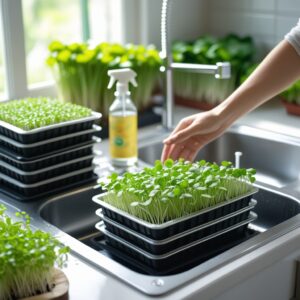
🌿 Introduction: Clean Trays = Healthy Microgreens
When growing microgreens, cleanliness is just as important as lighting and watering. Dirty trays can harbor mold, fungus, or bacteria, which can easily spread to your next batch of greens.
If you’re growing multiple trays every week (like most home growers or small-scale sellers), knowing how to clean and reuse microgreen trays safely helps save money and keeps your crops healthy.
Let’s go step-by-step through how to clean, disinfect, and store your trays the right way.
🧽 Step 1: Remove Leftover Soil and Roots
After harvesting your microgreens, you’ll see a mat of roots and leftover growing medium in your tray. Don’t skip cleaning it immediately — dried residue is harder to remove later.
What to do:
Use a small scraper or brush to loosen and remove soil or coco coir.
Dump the waste into your compost bin (great for sustainability!).
Rinse the tray under running water to remove any loose particles.
✅ Tip: A soft-bristle brush works better than metal scrapers — it won’t scratch your trays.
💦 Step 2: Wash with Warm Soapy Water
Next, it’s time to wash the trays thoroughly to remove organic residue and biofilm.
Here’s how:
Fill a sink or tub with warm water and mild dish soap.
Soak the trays for 5–10 minutes.
Use a sponge or brush to scrub all corners, drainage holes, and edges.
Rinse well with clean water.
If you use coco peat or compost-based mediums, washing is extra important because organic material encourages mold growth over time.
🧴 Step 3: Disinfect to Eliminate Germs and Mould Spores
Even after washing, trays can still carry harmful pathogens.
Disinfection ensures your next microgreen batch starts in a sterile, safe environment.
You can use any of these safe disinfecting methods:
🧂 Option 1: Vinegar Solution (Natural & Gentle)
Mix 1 part white vinegar with 1 part water.
Spray or soak trays for 10–15 minutes.
Rinse and air-dry.
🧪 Option 2: Hydrogen Peroxide (Strong but Safe)
Use 3% hydrogen peroxide solution.
Spray and leave for 5–10 minutes before rinsing.
💧 Option 3: Bleach Solution (For Deep Disinfection)
Mix 1 tablespoon bleach per gallon of water.
Soak trays for 10 minutes.
Rinse thoroughly with clean water.
⚠️ Important: Always wear gloves and ensure good ventilation when using bleach. Never mix bleach with vinegar or ammonia.
🌬️ Step 4: Air Dry Completely Before Storing
After cleaning and disinfecting, place your trays upside down on a drying rack or towel.
Make sure they’re completely dry before stacking or storing — moisture can encourage bacteria or mildew.
Pro tip:
If you reuse trays often, having two sets helps — one for growing, one for drying or cleaning.
🧺 Step 5: Store in a Clean, Dry Place
Once dry, store trays in a cool, well-ventilated space. Avoid stacking wet trays tightly together.
Bonus tip:
Label trays with the date of last cleaning to track your hygiene routine — helpful if you run multiple growing batches.
🌱 Why Reusing Trays Safely Matters
Reusing trays saves plastic waste and money, but skipping cleaning steps can lead to:
Moldy or slimy trays
Slow or uneven germination
Root rot or damping-off disease
Contaminated microgreens (unsafe to eat)
By cleaning and disinfecting properly, you’ll ensure your microgreens stay vibrant, safe, and flavorful every harvest.
🧼 Quick Cleaning Checklist
| Step | Action | Frequency |
|---|---|---|
| 1 | Remove soil and debris | After every harvest |
| 2 | Wash with soap and warm water | Every batch |
| 3 | Disinfect (vinegar/peroxide/bleach) | Every 1–2 batches |
| 4 | Air dry completely | Every time |
| 5 | Store properly | Ongoing |
🌿 Final Thoughts
Clean trays are the foundation of a successful microgreens operation.
A few minutes of washing and disinfecting between batches can save you hours of troubleshooting later.
So next time you harvest, don’t just plant your next batch right away — give your trays a little love first.
Your microgreens will reward you with healthier, faster growth and fresher flavor. 🌱