
🌱 Introduction
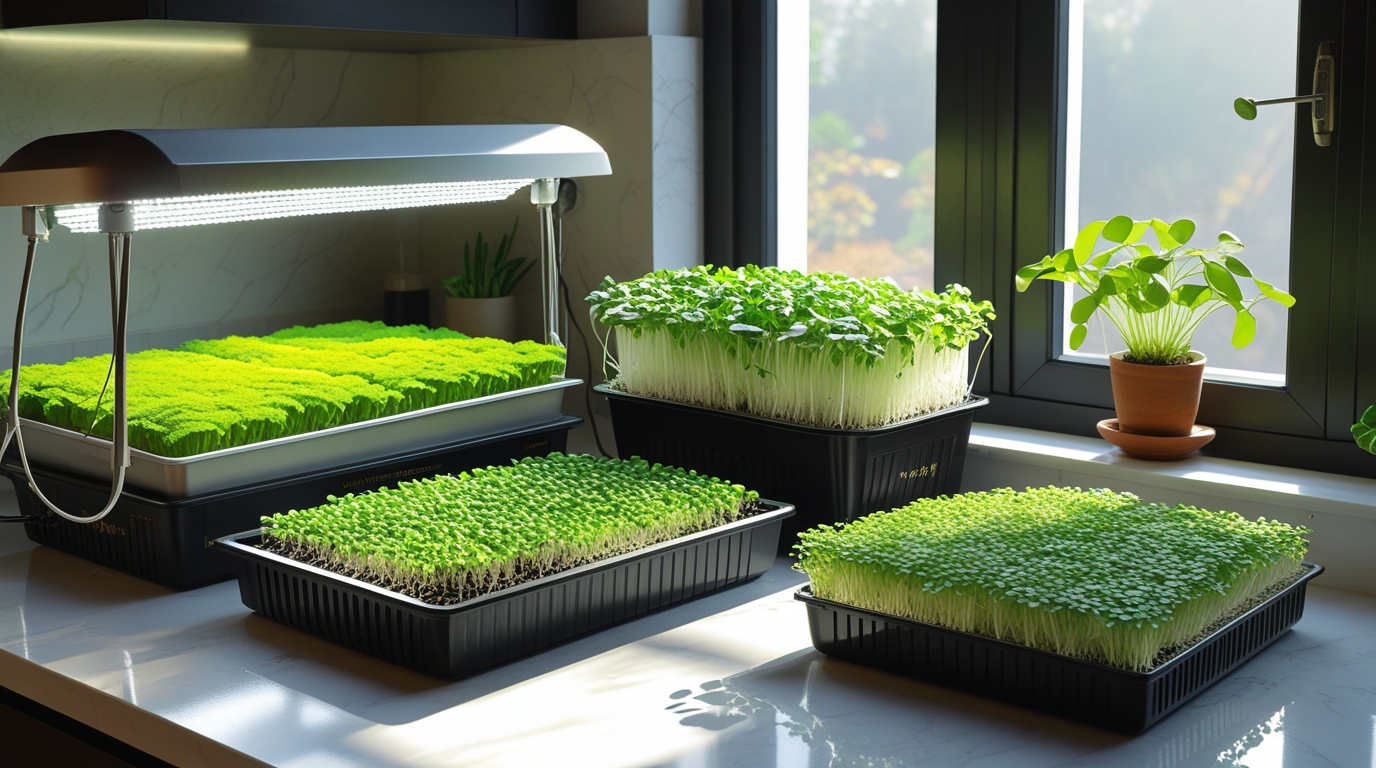
Natural vs Artificial Light for Growing Microgreens is one of the most common questions among new growers. Light plays a vital role in how your microgreens grow, taste, and look — directly influencing their flavour, colour, and nutritional value.
Whether you’re growing microgreens on a sunny balcony or inside your kitchen, the type of light you use can make a big difference. In this post, we’ll explore how natural sunlight compares with artificial grow lights, their pros and cons, and how to choose the best lighting setup for your microgreen garden — whether for home use or small-scale business.
☀️ Natural Light for Microgreens
Using natural sunlight is the most traditional and eco-friendly way to grow microgreens. It’s free, renewable, and provides a full spectrum of light that helps plants grow strong and healthy.
🌞 Benefits of Natural Light
Full Spectrum Light:
Sunlight contains all wavelengths of light — red, blue, and green — that microgreens need for photosynthesis and balanced growth.Enhances Flavour and Colour:
Microgreens grown under natural sunlight often have richer flavour and deeper colour, making them visually appealing and more aromatic.Cost-Effective:
No electricity or grow light investment needed — perfect for beginners and home growers.Eco-Friendly:
Growing with sunlight reduces energy consumption and carbon footprint.
⚠️ Limitations of Natural Light
Inconsistent Light Availability:
Cloudy weather or short winter days can limit sunlight, especially in regions with less sunshine.Uneven Growth:
Microgreens placed near a window may grow leggy or lean towards the light source if it’s not evenly distributed.Temperature Fluctuations:
Direct sunlight can heat up your trays, drying out the cocopeat and causing mould or stress to seedlings.
Best Practice:
Place your microgreens near a south-facing window (in India) where they receive 4–6 hours of indirect sunlight daily. Rotate trays every day for even growth.
💡 Artificial Light for Microgreens
If you’re growing indoors or want year-round consistency, artificial light (grow lights) can be a great solution. These lights are specially designed to mimic sunlight and provide controlled, stable lighting conditions for your microgreens.
🔆 Benefits of Artificial Light
Consistent Growth:
You can grow microgreens anytime — regardless of weather, season, or location.Controlled Environment:
You can adjust light duration, distance, and intensity to optimise microgreen growth.Faster Germination and Better Yield:
Artificial lights ensure your microgreens grow evenly and produce denser, healthier foliage.Customisable Spectrum:
LED grow lights provide specific light spectrums (red, blue, white) that boost photosynthesis and nutrient density.
⚠️ Drawbacks of Artificial Light
Initial Cost:
Quality grow lights require an upfront investment.Electricity Usage:
Continuous lighting increases power consumption.Setup Required:
You’ll need to arrange lights properly to avoid burning the leaves or uneven lighting.
🔦 Types of Artificial Lights for Microgreens
If you decide to use artificial lights, here are the most popular and effective options for growing microgreens indoors:
1. LED Grow Lights
Energy-efficient, long-lasting, and available in full-spectrum variants.
Produce very little heat, preventing mould and wilting.
Ideal for compact setups or vertical racks.
Amazon buy link: https://amzn.to/3LCCSYN
2. Fluorescent Lights (T5/T8 Tubes)
Affordable and effective for small-scale growers.
Offer bright, uniform light with minimal heat.
Slightly higher power usage than LEDs.
Amazon buy link: https://amzn.to/4nOQVbh
3. Compact Fluorescent Lamps (CFLs)
Great for beginners on a budget.
Easy to find and install but not as powerful or efficient as LEDs.
🌿 Comparing Natural vs Artificial Light for Microgreens
| Factor | Natural Light | Artificial Light |
|---|---|---|
| Availability | Depends on weather and season | Year-round consistency |
| Cost | Free | Requires setup and electricity |
| Light Spectrum | Full and natural | Adjustable (red, blue, full spectrum) |
| Growth Control | Limited | Highly controllable |
| Best For | Beginners, sunny locations | Indoor growers, small businesses |
Verdict:
If you have a sunny balcony or window, natural light is perfect for small home setups. But if you’re planning to grow microgreens commercially or during cloudy seasons, LED grow lights are a smart investment.
💚 How Much Light Do Microgreens Need?
Regardless of the light source, microgreens need:
12–16 hours of light per day for optimal growth.
Bright, indirect light (avoid direct harsh sunlight).
6–8 inches distance between the light and the plants for even coverage.
Too little light can make your microgreens tall, thin, and pale, while too much can dry them out or cause yellowing.
🌼 Impact of Light on Flavour, Colour, and Nutrition
Light plays a crucial role not just in growth, but also in the flavour and nutritional quality of your microgreens.
Natural sunlight tends to produce greens with a stronger flavour and darker colour, especially in crops like mustard, radish, and sunflower.
Artificial light, particularly full-spectrum LEDs, enhances uniformity, tenderness, and nutritional content, making them ideal for market-ready produce.
Pro Tip: A combination of both — a few hours of natural sunlight plus LED grow light — often gives the best results for flavour, colour, and yield.
🌾 Tips for Perfect Lighting Setup
Rotate trays every 24 hours to ensure even exposure.
Use reflective surfaces or foil sheets to bounce light around.
Avoid placing trays too close to the light source to prevent burning.
Monitor growth — pale leaves = not enough light, burnt tips = too much light.
🌱 Conclusion
Natural vs Artificial Light for Growing Microgreens isn’t a one-size-fits-all answer — it truly depends on your space, climate, and growing goals. Both lighting options have their advantages: natural sunlight provides free, full-spectrum light ideal for small home growers, while artificial LED grow lights ensure consistency, control, and reliable harvests year-round.
If you enjoy simple, low-cost growing, go for natural light. But if you want steady growth, better yield, and professional quality, artificial grow lights are worth the investment.
Ultimately, when you understand how light influences the colour, flavour, and growth of your greens, you can create the perfect environment for thriving, nutrient-rich microgreens — no matter the season or setup.
Disclosure: This post contains affiliate links. If you purchase through these links, I may earn a small commission at no extra cost to you. I only recommend products I truly believe in.